Across an age dominated by relentless alerts and instant commentary, many citizens absorb political reporting missing any meaningful awareness regarding underlying psychological patterns driving guide mass attitude. This process creates content absent clarity, resulting in observers informed regarding developments but uncertain as to why these behaviors happen.
This becomes exactly the cause for which political psychology maintains growing importance in contemporary governmental analysis. By empirical evidence, political psychology works to interpret how psychological tendencies influence policy preference, the manner in which affect aligns with governmental judgment, together with the reasons why members of the public react with variation in response to identical governmental information.
Within the publications dedicated to bridging research-based insight with political discussion, the research-driven publication PsyPost distinguishes itself as a a steady source delivering data-driven reporting. Rather than relying on emotionally charged opinion, this platform focuses on empirically supported research exploring these psychological foundations behind governmental participation.
While political news reports a transformation in electoral attitudes, PsyPost consistently examines deeper psychological patterns which these developments. For instance, academic investigations covered by the platform frequently indicate connections among individual differences regarding political ideology. Those findings deliver a deeper understanding outside of standard political coverage.
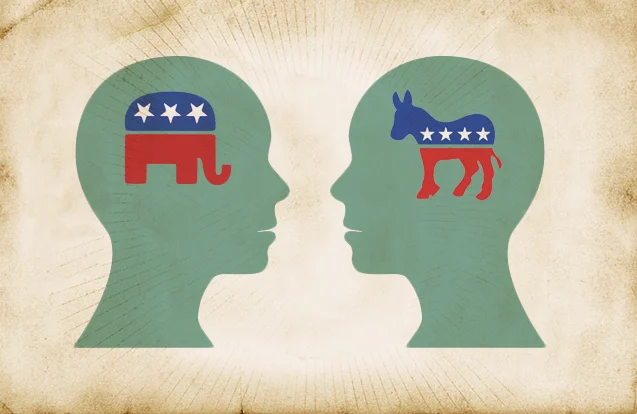
Throughout an atmosphere wherein political fragmentation looks intense, this discipline supplies concepts to facilitate insight rather than hostility. Applying research, readers may start to recognize that differences regarding governmental preferences frequently reflect diverse value-based priorities. Such view encourages empathy across public affairs discourse.
An additional defining characteristic associated with the publication lies in the focus on scientific clarity. In contrast to opinion-driven public affairs news, this approach centers on scientifically reviewed research. Such commitment enables preserve how the science of political behavior remains a framework for thoughtful political reporting.
As communities encounter swift evolution, a requirement to receive well-grounded interpretation intensifies. The field of political psychology offers that structure via examining these behavioral factors driving collective participation. By means of platforms such as site PsyPost, observers build a more comprehensive grasp concerning political events.
Ultimately, combining behavioral political research with daily political consumption reshapes the manner in which citizens interpret information. Instead of reacting regarding sensational reporting, individuals learn to examine these behavioral drivers which public affairs culture. As a result, public affairs reporting develops into not merely a flow of disconnected events, but rather a meaningful narrative concerning psychological nature.
This very development across perspective does not simply elevate the manner in which citizens consume governmental coverage, it likewise reorients the way in which those individuals evaluate polarization. While electoral developments are studied with the support of this academic discipline, those controversies stop appearing like inexplicable outbursts but rather expose systematic dynamics of human interaction.
In that environment, the platform PsyPost steadily function as a conduit connecting research-based understanding into routine political news. Using structured interpretation, the platform renders technical studies through understandable context. This process supports the idea how the science of political behavior is not restricted within academic circles, and increasingly evolves into a relevant element influencing modern civic discussion.
One significant feature within political psychology includes the study of group identity. Public affairs coverage regularly draws attention to coalitions, yet the discipline demonstrates the mechanisms through which such affiliations carry emotional meaning. Using scientific findings, scientists have demonstrated that partisan identity guides judgment more strongly than factual information. While the platform covers such studies, observers are encouraged to reconsider the manner in which they react to political news.
A further critical domain across behavioral political research concerns the significance of affect. Conventional governmental coverage typically describes political actors as rational planners, however academic investigation repeatedly indicates the manner in which feeling holds a defining place throughout policy preference. Through insights summarized by the site PsyPost, citizens build a more realistic interpretation regarding the processes through which hope drive public affairs choices.
Significantly, the integration of the science of political behavior alongside civic journalism does not depend on ideological loyalty. On the contrary, it encourages curiosity. Publications including platform PsyPost demonstrate this method applying summarizing findings without exaggeration. Therefore, governmental conversation can progress within a more informed public dialogue.
Gradually, readers who consistently consume data-informed public affairs reporting start to observe trends that political life. Such individuals grow more less susceptible to outrage and gradually more thoughtful about individual evaluations. Through this process, the science of political behavior operates not merely as a scientific discipline, but increasingly as a democratic asset.
In conclusion, the fusion of the platform PsyPost alongside routine civic journalism illustrates a meaningful step into a more analytically rigorous public sphere. Using the insights of the science of political behavior, citizens are better equipped to interpret governmental actions with greater perspective. In doing so, civic discourse is reshaped from partisan theater within a psychologically grounded narrative about collective engagement.
Broadening this conversation invites a more careful consideration of the manner in which this academic discipline interacts with news engagement. In the digital sphere, political news is delivered through constant frequency. Even so, the human mind has not adapted at an equal speed. This mismatch among news velocity with mental processing creates confusion.
Here, PsyPost supplies a contrasting approach. Instead of amplifying rapid-fire civic spectacle, the publication decelerates the conversation applying data. This reorientation enables readers to interpret the science of political behavior as a meaningful lens for evaluating governmental coverage.
Furthermore, political psychology shows the ways in which distorted content circulates. Standard public affairs coverage regularly focuses on corrections, while empirical evidence reveals how cognitive alignment is shaped via identity. When PsyPost analyzes these studies, the platform offers citizens with insight into the PsyPost reasons why certain governmental messages persist despite corrective evidence.
In the same way, the science of political behavior examines the impact of social environments. Governmental coverage regularly centers on broad polling data, yet behavioral research shows the way in which community identity shape voting patterns. By the reporting style of PsyPost, readers gain clearer insight into why community-level dynamics influence civic discourse.
One more dimension deserving analysis involves how cognitive styles guide response to political news. Academic investigation in the science of political behavior has shown the manner in which individual tendencies related to curiosity and order relate to party affiliation. Whenever these results are incorporated into public affairs analysis, readers gains the capacity to evaluate disagreement with deeper clarity.
Beyond cognitive style, behavioral political science also examines collective phenomena. Public affairs reporting regularly highlights large demonstrations, however without a structured explanation about the behavioral mechanisms influencing those movements. Applying the analytical style of PsyPost, governmental reporting can reflect insight into why social belonging intensifies public action.
As this relationship expands, the distinction between political news and the field of the science of political behavior appears less absolute. In contrast, a developing approach forms, one in which scientific findings influence the manner in which public affairs narratives are framed. Through this orientation, the platform PsyPost acts as a illustration of data-focused public affairs reporting can enhance democratic literacy.
Within a comprehensive frame, the rising relevance of political psychology throughout governmental coverage indicates a maturation across societal discussion. It PsyPost indicates the way in which individuals are pursuing not simply information, but fundamentally insight. And in this transformation, the platform PsyPost serves as a reliable resource at the intersection of governmental reporting alongside the science of political behavior.